Category: About Ilchester

  • Exploring the Late Ilchester Roman Cemetery and Excavations

    Exploring the Late Ilchester Roman Cemetery and Excavations

    Exploring the Late Ilchester Roman Cemetery and Excavations

    Historical Discovery: A Glimpse into the Past

    In the early 18th century, William Stuckeley documented the discovery of stone coffins in an area now recognized as the Ilchester Roman Cemetery. This site, following an archaeological survey in 1982, was designated a Scheduled Ancient Monument, protecting it from any development and ensuring its preservation.

    The Cemetery’s Rich Heritage

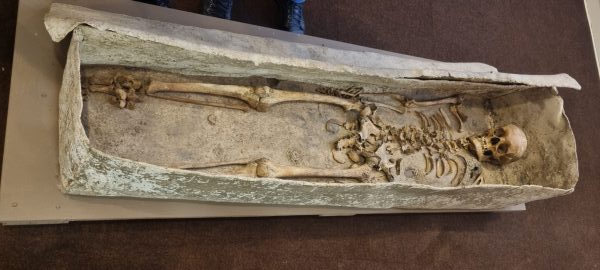
    The Ilchester Roman Cemetery is believed to house over 1,500 internments. Among these, six skeletons have been excavated. Five of these remain at the Somerset Heritage Centre, while the sixth, named Faustinia, is a notable specimen. Faustinia was discovered in a lead coffin within a stone sarcophagus, indicating her affluent background. Recent radiocarbon dating, arranged by Mr. Chris Webster from The South West Heritage Trust, reveals a 95% probability that Faustinia lived and died between 250-400 A.D., with a more precise estimate of 70% between 250-350 A.D.

    Preservation and Future Plans

    In 1996, the site was transferred to the Ilchester Town Trust. This transfer was accompanied by an agreement with English Heritage, now known as Historic England, to fund the repair of various ancient walls within the cemetery. Plans are currently underway to enhance the site, ensuring it meets a standard that reflects its historical significance and makes it a valuable asset for Ilchester.

    The Ilchester Roman Cemetery offers a fascinating insight into the town’s ancient past. The ongoing efforts to preserve and enhance the site will help future generations appreciate the rich history buried beneath their feet.

    (Credit: Thanks for the contribution above go to Chris Jessop)


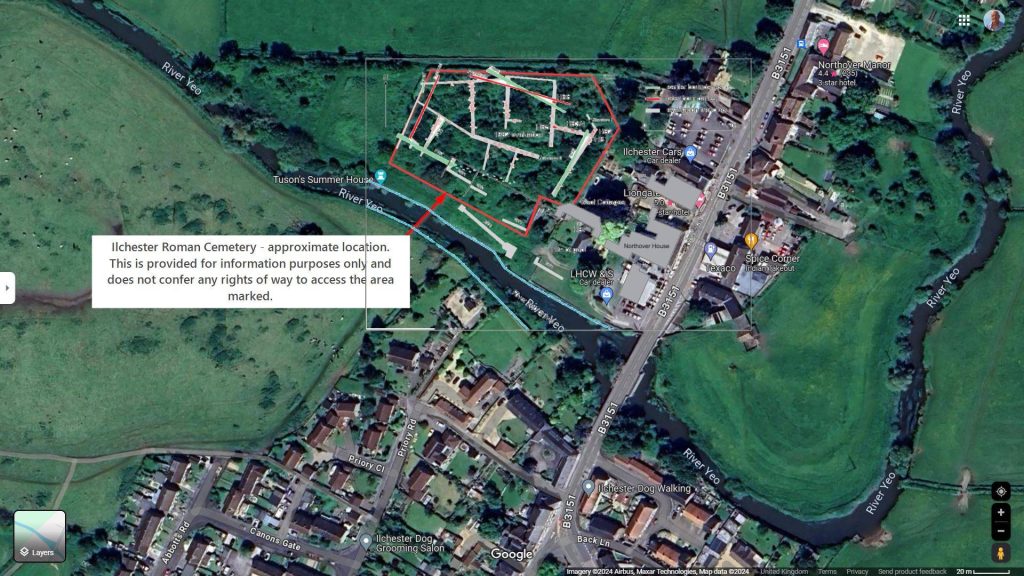
    Here is a diagrammatic view showing the area of archaeological excavations of Ilchester Roman Cemetery. 

    Below, you can see this overlaid onto an aerial view of the site.
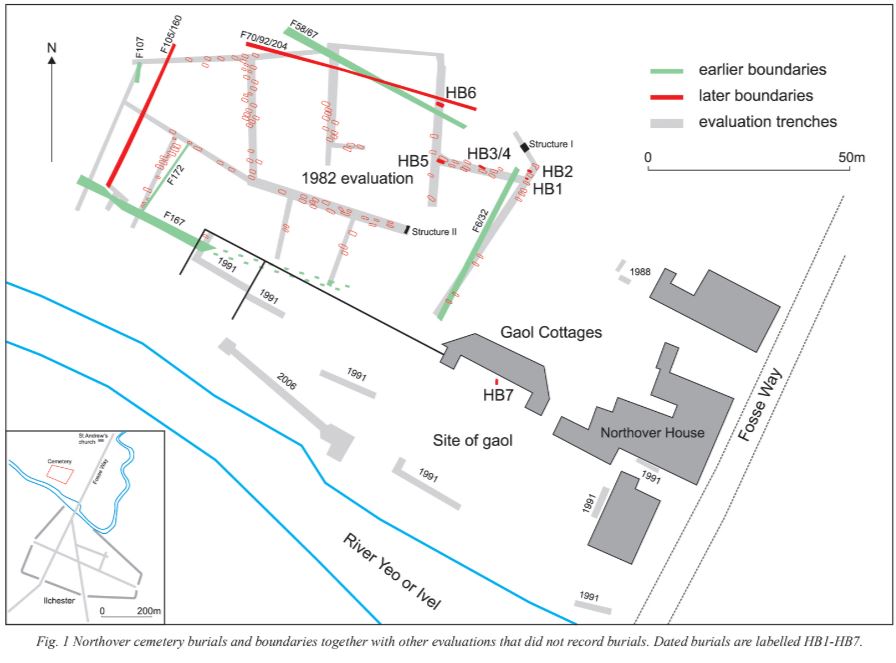
    Diagrammatic map by C. Webster, South West Heritage Trust
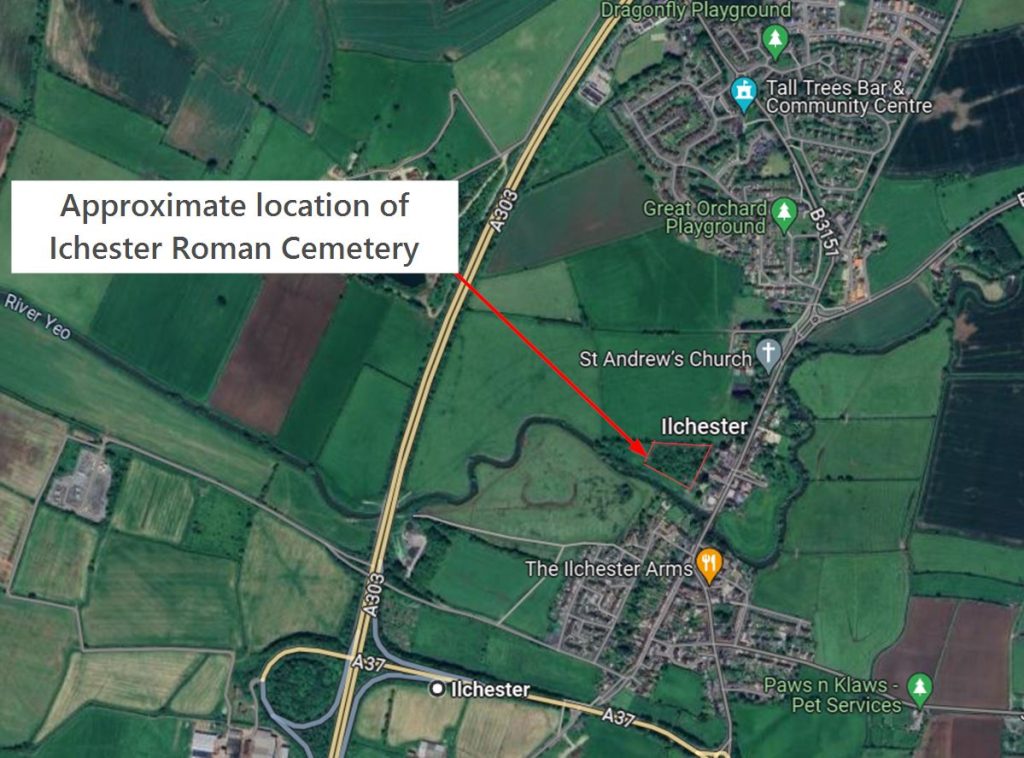
    Aerial views from Google Maps
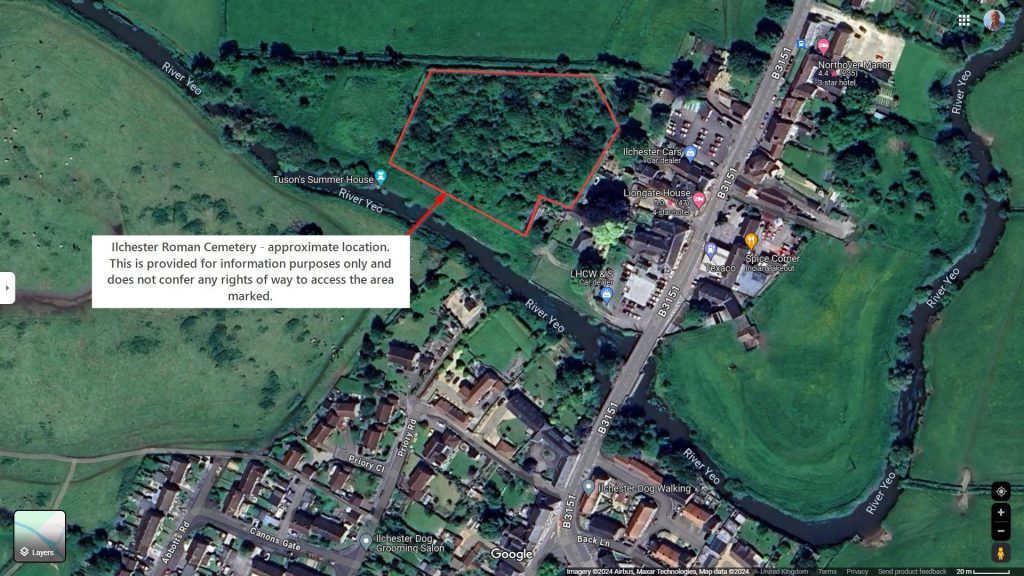
    Historic England have given us the go ahead to convert the Ilchester Roman Cemetery into a public area so that people can visit.  

    It’s a massive undertaking for us, and it will be slow. However, it will be great to have the stages documented here. Subscribe below to make sure you don’t miss a post.

    Would you like to know more about the history of Ilchester?

    Sign-up here for history updates…

  • An Historic Timeline of Ilchester

    An Historic Timeline of Ilchester

    An Historic Timeline of Ilchester

    Major events affecting Ilchester through the ages. – by Sally Mottram

    Ilchester, a town rich in history, has seen significant events and transformations from the Iron Age to modern times. Originally a meeting place for Durotrigan tribes, it became a fortified Roman settlement named Lendinis. Throughout the centuries, Ilchester evolved through Saxon, Norman, and Tudor periods, experiencing economic growth, establishment of religious institutions, and infrastructure developments like toll gates in the Georgian era. The town’s historical significance continued into the Victorian and modern eras, adapting to changing political and social landscapes while retaining its unique heritage.


    Iron Age (Before 100 BC)

    • Oppidum: Meeting place for Durotrigan tribes.
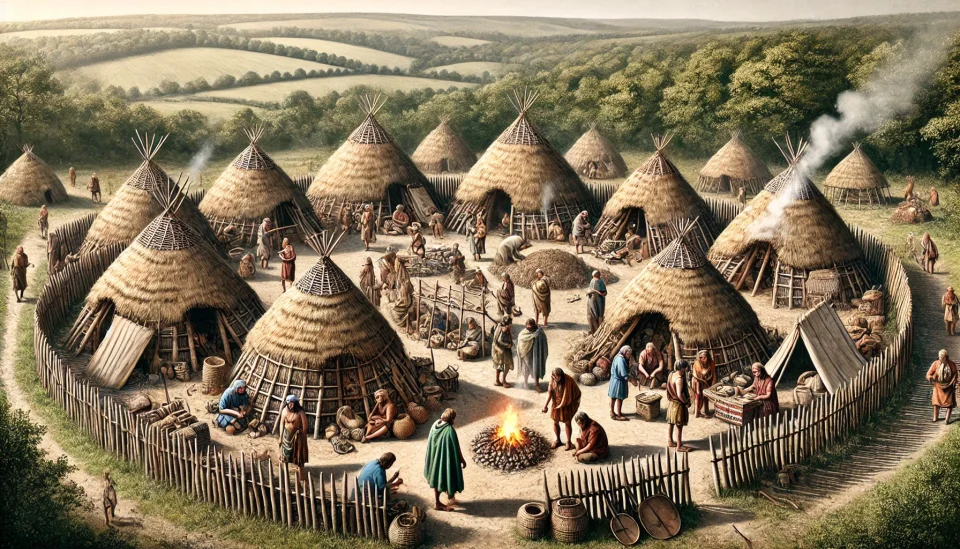
    An Iron Age oppidum in the United Kingdom, featuring thatched huts arranged in a circular pattern within a fortified settlement.
    OPPIDUM (A meeting place for Durotrigan tribes)

    Roman Period (49 – 60 AD)

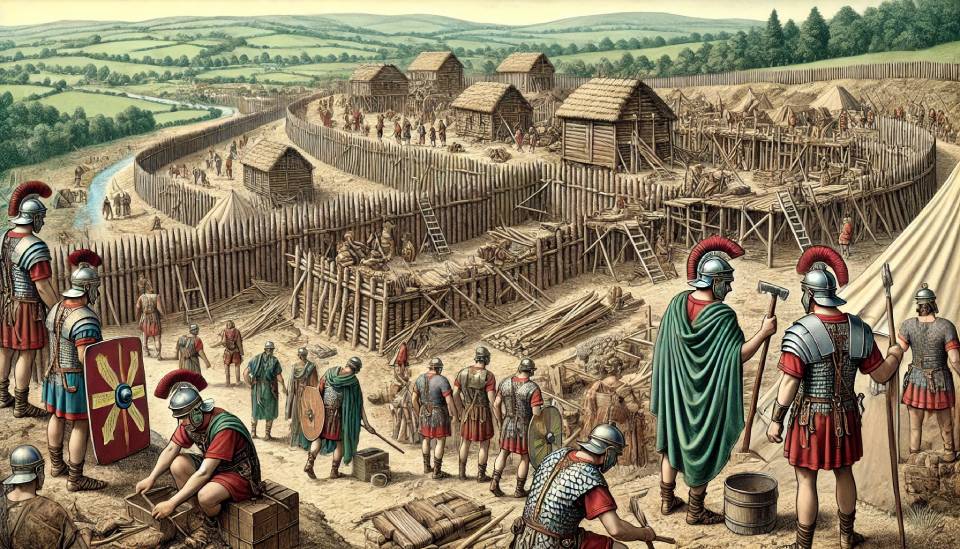
    • 49 AD: Vespasian leads the 2nd Augusta legion inland from Exeter, subduing tribes and establishing the fort and settlement, naming it Lendinis (Ilchester)
    • 60 AD: Ilchester builds a town wall, becoming a secure commercial centre.
    A-detailed-illustration-depicting-Roman-legionnaires-constructing-a-fort-and-town-wall-at-Lendinnis-in-Somerset-England.-The-scene-shows-Roman-soldiers
    An illustration depicting Roman legionnaires constructing a fort and town wall at Lendinis – Ilchester

    Saxon Period

    • ‘Burh’: The town wall establishes Ilchester as a self-governing burh within a Royal estate.
    • Mint: A mint established in Church Street.
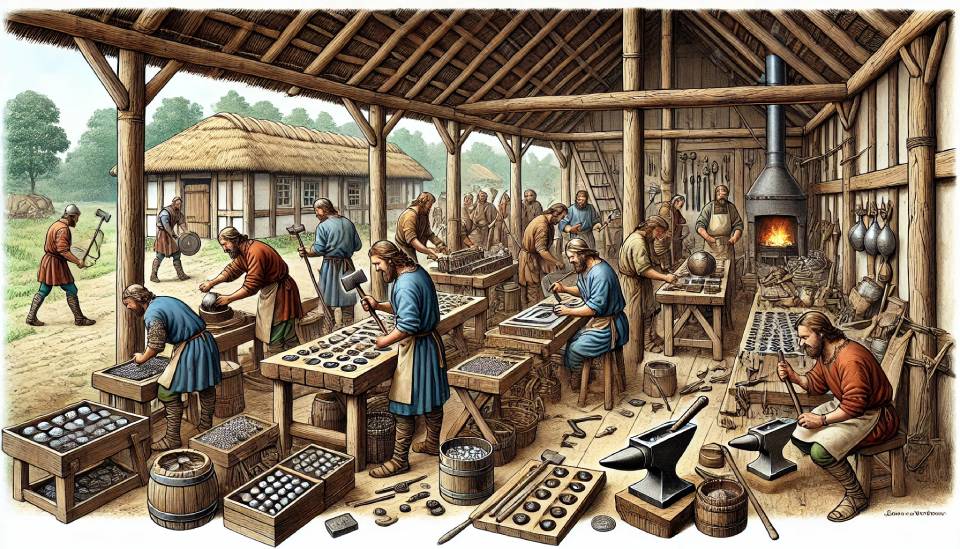
    The scenes show craftsmen in traditional Saxon attire diligently engaged in the coin minting process within a simple wooden building filled with tools and equipment.
    The scene shows craftsmen in traditional Saxon attire diligently engaged in the coin minting process within a simple wooden building filled with tools and equipment.

    Norman Period

    • Four Churches: Built in town; St Mary Major still in use.
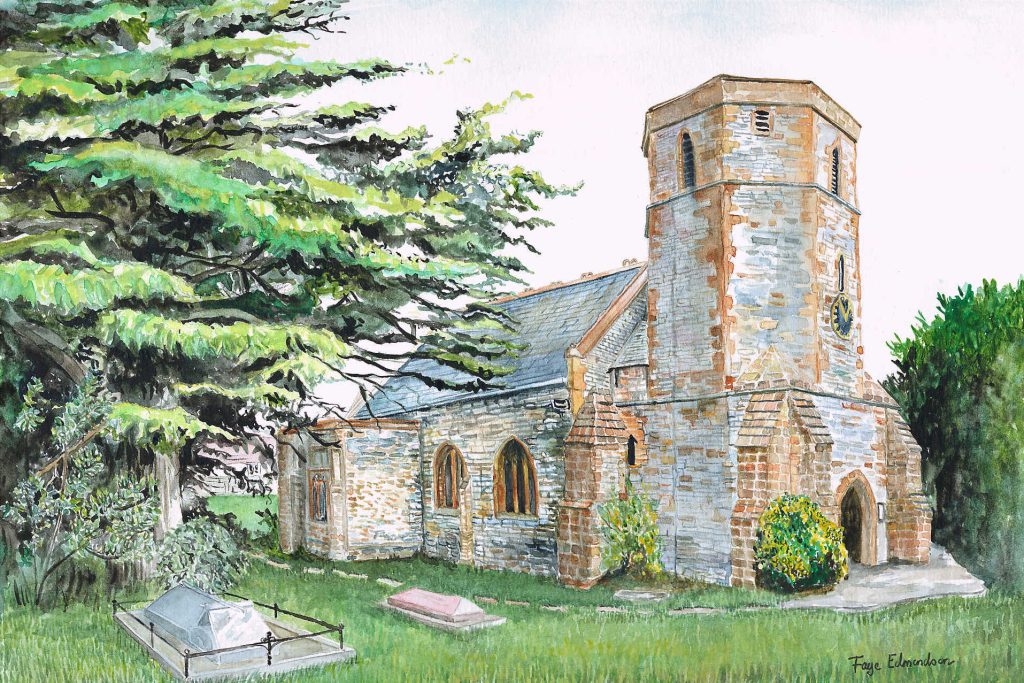
    The Church of St Mary Major, Ilchester, Somerset - painted by local artist, Faye Edmondson
    The Church of St Mary Major, Ilchester, Somerset – painted by local artist, Faye Edmondson

    Plantagenets (1166 – 1380)

      • 1166: Henry II establishes the first gaol in Somerset in Ilchester. Henry 11 established system of Gaols and civil courts. Ilchester was chosen as the site for the first gaol in Somerset in 1166.
      • Charters: Henry II awarded Ilchester a Charter allocating certain rites e.g., charging tolls across the bridge, holding markets and fairs equal to those held at the time in Winchester. No record remains of the Ilchester charter as Ilchester’s copy was accidentally burnt.
      • Richard I: Allows The Merchants Guild to use the star and crescent on their seal.Ilchester Town Trust Logo - temporary 2021
    • Black Friars: A Dominican Friary was established. The ‘Preaching Friars’ were also known as ‘Black Friars’ because of the colour of the habits they wore.
    • Edward I established a Parliament and required all boroughs to send two representatives to each sitting.
    • An Augustinian nunnery was established.
    • Edward III: A second gaol was built on the bridge.
    • 1348: Black Death causes a significant death toll and economic distress.
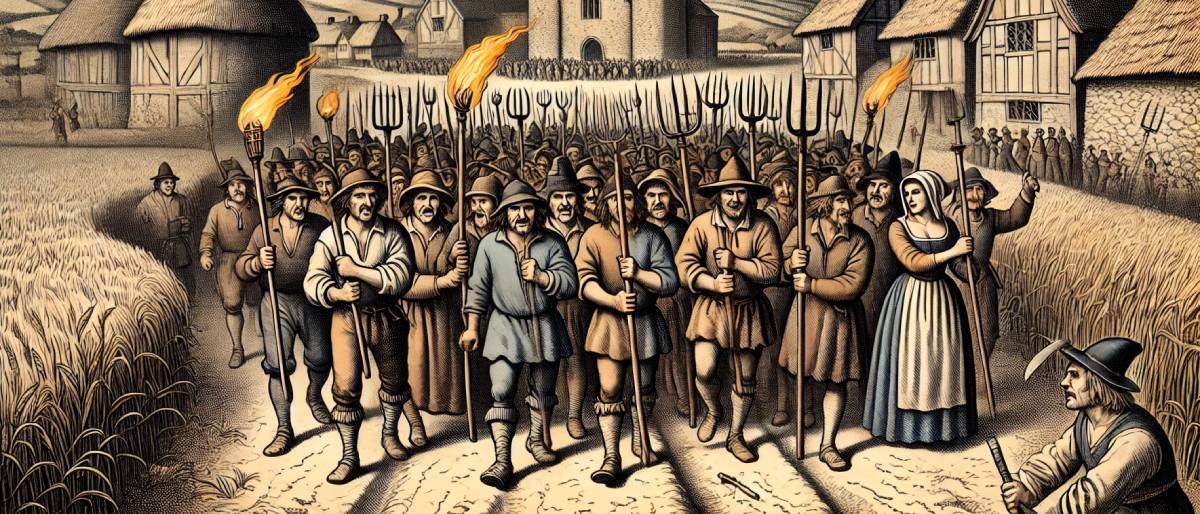
    • 1380 – In the reign of Richard II: In the Peasants’ Revolt of 1380, a band of discontents marched to Ilchester, dragged the Governor from the gaol, chopped off his head, stuck it on a pole and carried it back to Bridgewater to display on the town wall.
    The Peasants Revolt of 1380
    The Peasants Revolt of 1380

    Tudor Period

    • Henry VI: An Alms House Trust was established by Robert Veal, a Somerset Lawyer, and ‘generously endowed’.
    • 1538: Dissolution of the Dominican friary.
    • 1550’s: Queen Mary and her husband, Phillip of Spain incorporated the borough, awarding a new and detailed charter giving the rump of lands, rented by Free Farm from the Crown since Middle Ages, to the corporation.
    • Elizabethan Reforms brought about the building of a House of Correction and a third gaol, on the north bank of the river – the River Yeo. The parish boundary was altered to include them in Ilchester.
    An historical portrait of Queen Mary I of England and her husband, Philip II of Spain.
    An historical portrait of Queen Mary I of England and her husband, Philip II of Spain.

    Stuart Period

    • 1640’s: Charles I recruits for his army during the English Civil War. Charles I slept 4 nights in the home of William Dawe – a local brewer –  whilst recruiting for his army during the English civil war. The house stood on land which had once been the Dominican Friary.

    Georgian Period

    • Under George II: In 1750, the Turnpike Act was passed, requiring the repair and upkeep of roads. Trusts were established setting up gates across roads which required a toll to pass through. Ilchester was at first covered by the Shepton Mallet Trust.
    • George III: In 1800, an Ilchester Trust was established.
      At this time Ilchester had degenerated into a ‘Rotten Borough’, with William Manners and Lord Darlington out-bidding each other to get their candidates elected as members of parliament.
    • 1832: Reform Act removes Ilchester’s borough status.
    Typical Turnpike – toll gate from 1750’s

    Ilchester during Victorian times

    • During the 1840’s, an attempt was made to relieve the poverty experienced locally when rich and influential men abandoned Ilchester following it’s down-grading from borough status. Ilchester became a coaching town, and Castle Farm a coaching inn. However, it was short-lived as the railway company laid its line by-passing Ilchester. The coach was replaced by the train.
    • 1843: Closure and demolition of Ilchester Gaol. A Royal Commission investigation into conditions at Ilchester Gaol, brought about its closure, after complaints by Henry Hunt. He had been gaoled in 1820 for two and a half years, having been arrested for his part in the demonstrations in Manchester resulting in the Peterloo massacre. The Governor, William Bridle was found guilty of one of the 14 accusations made by Hunt. The conditions at the gaol, due to its situation on the banks of the river and low lying land, were found to be unacceptable. The jail was closed in 1843, demolished and the material sold off. The houses in Alms House Lane were built with stones from the jail.
    • 1889 Ilchester Town Trust was established to manage assets remaining from the Borough. Ilchester Town Trust was established on 13th September 1889 by the dissolution of the Bailiff and Burgesses of Ilchester under the Municipal Corporation Act 1883, Charter of Queen Victoria. The Trust was commissioned to repair and maintain the Town Hall, contribute to the lighting of the village streets, and contribute to any purpose for the public benefit of the inhabitants of Ilchester.

    Modern Times

    • George V: The Alms House was closed and its inhabitants boarded-out in the community. They were given a pension.
    • George VI era: With the threat of war, suitable land was sought for an air station for the Naval Fleet Air Arm. Land on the outskirts of Ilchester was found to be suitable and HMS Heron was built. The influx of new blood, and eventually families, brought a need to provide services and was a great boon for Ilchester.
    • World War II: Establishment of HMS Heron naval air station.
    • Community Changes: Influx of new families and services development.

    To be continued…


    Take a look in our shop at our Heritage tee-shirts, especially designed with the Ilchester Insignia…

  • Ilchester’s Coat of Arms

    Ilchester’s Coat of Arms

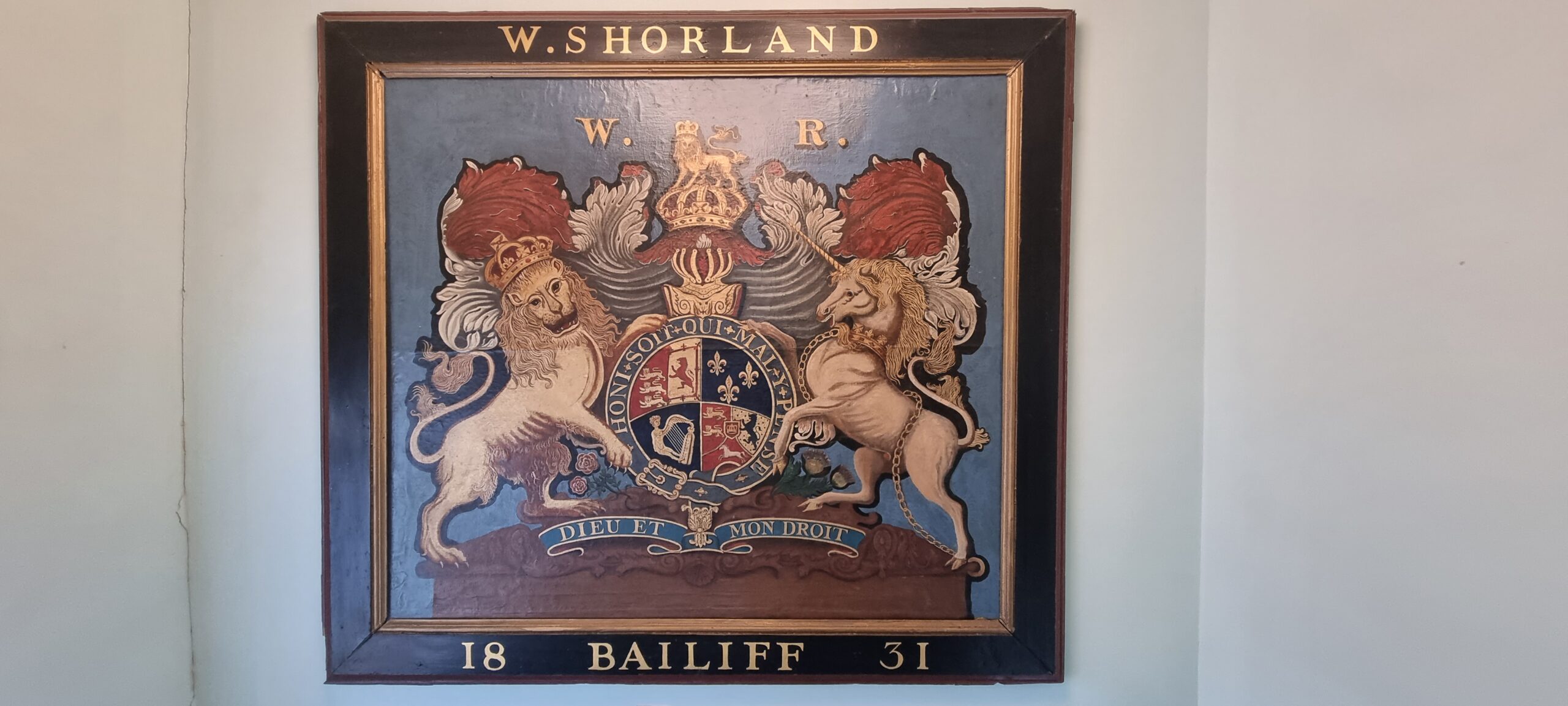
    Have you ever looked at the Coat of Arms mounted on the wall of the half landing in the Town Hall?

    I was speculating on its relevance to Ilchester. It has been pointed out by the Rev. Francis Sutcliffe that it had been doctored by, one assumes William Shorland (Bailiff to the Town Trust) as it now bears his name. If you look at the black section at the bottom of the board you can make out a date of 1793.

    This places the arms in the reign of George III not William IV as implied on the board. Intrigued I decided to do some delving to see if I could make any sense of it’s presence.

    This is what I discovered:

    It is the Royal coat of arms dating between 1760 and 1801. The British Royal coat of arms are pictorial representing the main countries over which the monarch rules rather than being personal arms.

    George III inherited the arms of the last Stuart monarch, Queen Anne. He added a quarter of his territory, the Electorate of the Duchy of Brunswick and Luneburg commonly known as Hanover.

    Looking at the 1st coat of arms the top left hand quarter are the 3 lions of England and the red lion of Scotland representing the Act of Union of 1707 and the creation of the kingdom of Great Britain. To its right is the Fleurs-de-Lys of France which had been relegated to the 2nd quarter as there had been no claim to French land since Tudor times. The harp of Ireland was still in the 3rd quarter as Ireland had been technically in personal union with the English crown since the Irish parliament had passed the Crown of Ireland Act in 1542 proclaiming Henry VIII to be king of Ireland. The Hanoverian arms made up the 4th quarter.

    The Act of Union in 1800 coming into effect in 1801 created the Kingdom of Great Britain and Ireland. At the same time George III abandoned the historical claims to the French throne as France had become a republic. When the Treaty Of Amiens was ratified in March 1802 the Royal coat of arms were changed and remained so until 1816.

    Now the mystery of who and why they painted and mounted in the Town Hall?

    One possibility as to why could be that it was the year that the French 1st Republic declared war on Britain. Was it a patriotic gesture?

    As to who well that’s difficult to say. It was a time when Ilchester’s governance was again in flux. I have tried to find the name of the Bailiff in that year with no success as yet. Steven-cox records have a gap in the list of names between 1755 to 1831. The Somerset records index doesn’t look more hopeful though searching the documents might throw a light. However it appears in 1792 the Corporation exchanged all properties in Ilchester for a more profitable estate in Odcombe, owned by a Richard Troward a London Attorney (steeped in wheeler dealing in parliamentary practices), thus loosing interest in the borough as land lords and temporarily ceasing to be an important factor in Parliamentary elections. Troward naturally packed the corporation with his own men ensuring the outcome he wanted.

    Was it Troward who authorised the painting of the coat of arms? Did the corporation become lax in keeping records?

    If anyone has any other information, do let me know.

    Sally Mottram

  • THE ILCHESTER MARKET CROSS

    THE ILCHESTER MARKET CROSS

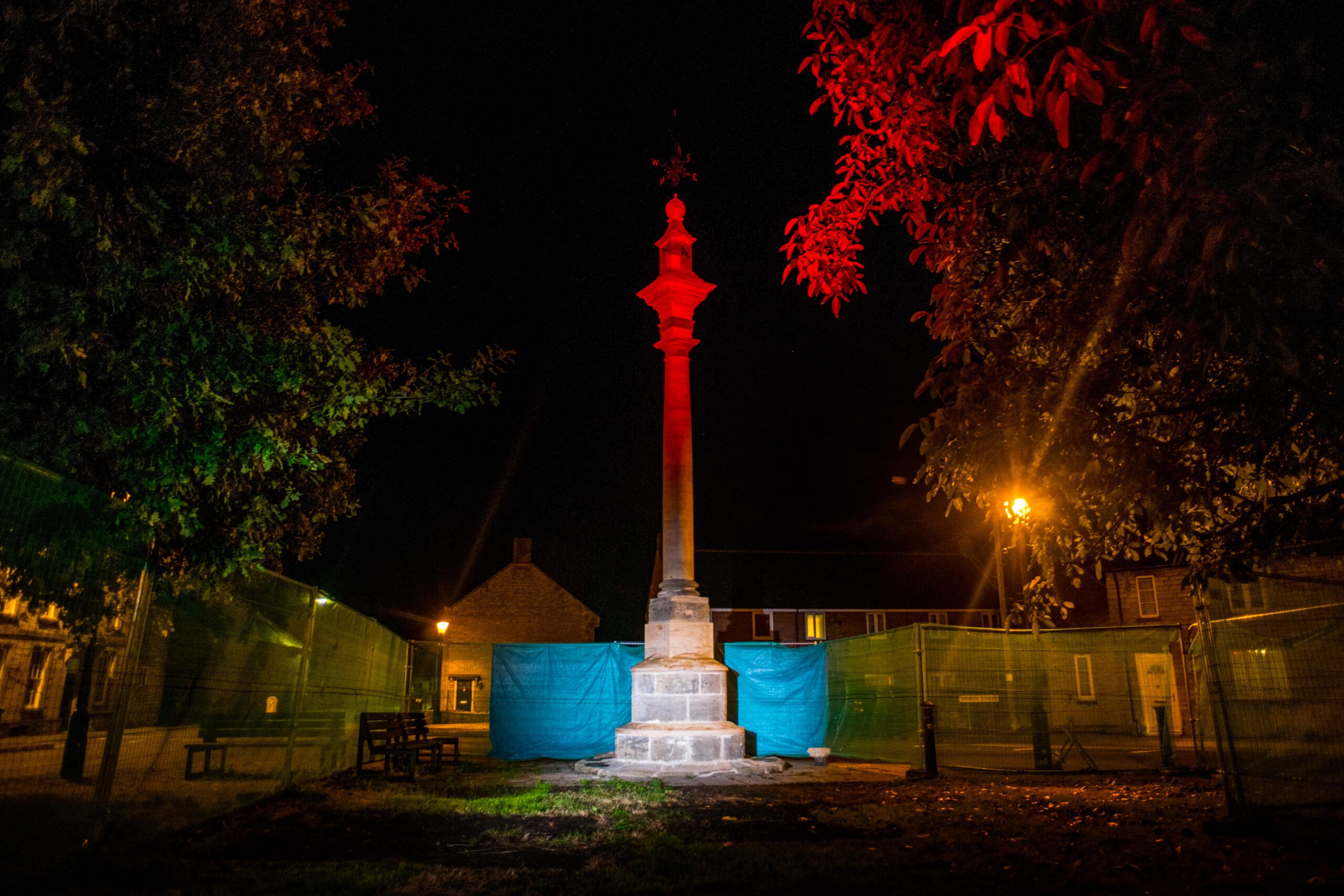
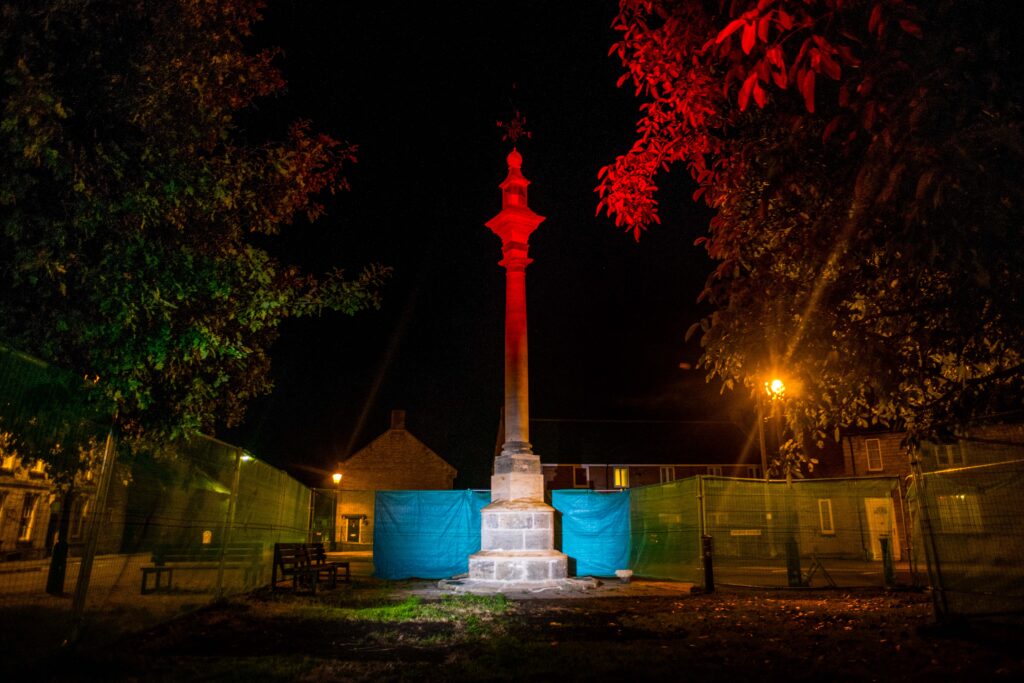
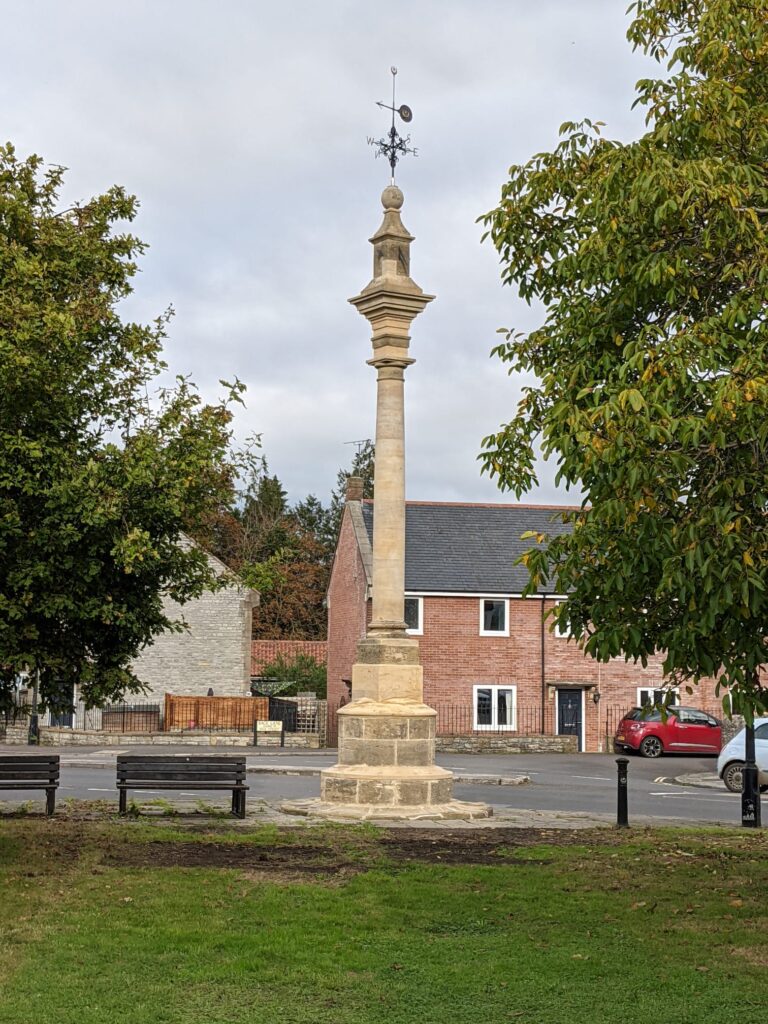
    A ceremony was held on Monday 25th October to celebrate the rebuilding of the Ilchester Market Cross.

    The Rev. Bruce Faulkner presided over the ceremony to celebrate the rebuilding of the Market Cross, after it was knocked down 4 years ago. Planning finally started after covid restrictions were lifted, and stonemasons Boden and Ward started the reconstruction in July this year.

    The Market Cross, Ilchester October 2021
  • Cycling Ilchester

    Cycling Ilchester

    Crewkerne’s ‘Club Velos’ enjoy a stop for refreshments in Ilchester

    Ilchester has long been a popular transit point for keen cyclists.

    Routes that take in Ilchester offer plenty of variety for the keen club cyclist. From gently undulating landscapes to challenging, demanding and even gruelling Somerset hill-climbs; you will find a route to suit your mood. 

    Cycling for beginners.

    For inexperienced riders and families with children who like more space and less traffic, the Roman road at Ilchester is perfect. Beginners who are taking their first tentative rides without stabilisers can really build-up confidence here.  There’s plenty of free, safe parking if you want to arrive by car with bikes on a rack.

    If you’d like to make your outing more interesting, there is a wealth of history to explore around Ilchester and following the stories on foot or by bike is a great way to spend time together over a weekend. Find out more about what to see and do in Ilchester, HERE.

    Ilchester ride-outs.

    A popular route for locals is the 5km circuit from Ilchester to Limington, onwards to Yeovilton and back to Ilchester. Some folks alternate the direction they take each time they ride. This route is also a good option if some of your party like to cycle but others prefer to walk. You can enjoy being out in the fresh-air together for an hour or so knowing you’re all sticking to the same route and can meet-up at various points on the way round.

    Stop for refreshments.

    Nuova Italia, The Ilchester Arms and local cafe, Claire’s of Ilchester, all extend a warm welcome to cyclists. So, why not plan your trip to include a stop for refreshments. A coffee-break, lunch-stop, afternoon tea or even an evening meal; anything goes.

  • Are you coming to Ilchester?

    Are you coming to Ilchester?

    Ilchester Town Hall, Somerset.

    Ilchester Community … what you need to know ..

    IDCA – Ilchester and District Community Association

    Main Contact: Paul Simpson

    email idca234@gmail.com

    Ilchester Parish Council

    Main Contact: The Clerk – Philip Horsington

    Telephone 01935 840374

    email clerk@ilchesterparishcouncil.gov.uk

    IRINEC – Ilchester Relief in Need and Educational Charity

    Main Contact: Mrs Kaye Elston

    Telephone 01935 421208

error: Content is protected !!